By Sourena Jalili
Europe’s relationship with the Middle East is entering a new phase. With the rise of Friedrich Merz to Germany’s leadership, Berlin’s approach to the region—particularly toward Iran—appears to be shifting from cautious engagement toward strategic pressure.
Yet Germany’s policy is unlikely to follow a purely ideological path. The Middle East remains central to global energy markets, maritime security, and geopolitical stability. As tensions escalate across the region and the possibility of broader conflict looms, Berlin must navigate a difficult balance: confronting political threats while preventing economic disruption.
This tension will define Germany’s next chapter in Middle Eastern policy.
From Strategic Ambiguity to Strategic Positioning
For years, German foreign policy toward Iran was characterized by cautious diplomacy. Under previous governments, Berlin attempted to preserve dialogue channels while maintaining alignment with European partners through frameworks such as the Joint Comprehensive Plan of Action.
The Merz government appears less inclined to maintain that equilibrium.
Statements from Berlin have been increasingly critical of the Iranian leadership, reflecting broader concerns within Europe regarding regional security, missile proliferation, and internal repression. At the same time, Germany’s leadership has emphasized the need to support Israel’s security while reinforcing transatlantic cooperation with the United States.
This rhetorical shift reflects deeper structural dynamics in German foreign policy. The governing Christian Democratic tradition has historically favored a stronger Atlantic orientation, closer strategic alignment with Washington, and a more assertive stance toward adversarial regimes.
But rhetoric alone does not determine policy.
Germany’s economic realities impose limits on how far Berlin can push confrontation.
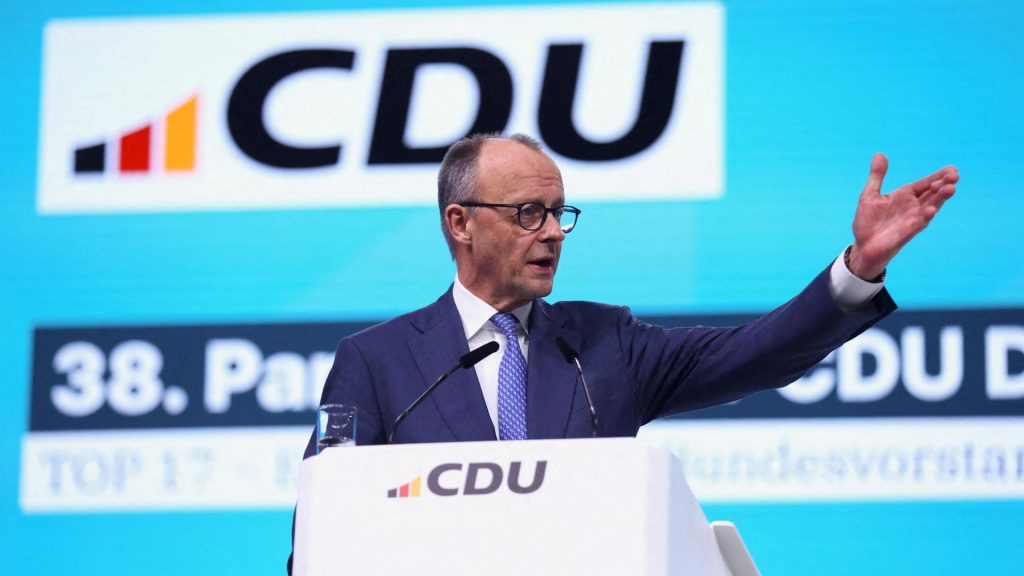
Image from https://www.tagesschau.de/
The Energy Constraint
The Middle East remains one of the most critical energy regions in the world. Despite Europe’s efforts to diversify away from Russian gas after the war in Ukraine, energy markets remain deeply interconnected with Gulf oil production and maritime trade routes.
Germany—Europe’s largest industrial economy—cannot ignore this reality.
Any major conflict involving Iran risks destabilizing the Strait of Hormuz, through which roughly a fifth of global oil supply passes. Even limited disruptions to shipping in the Persian Gulf would send immediate shockwaves through energy markets, raising costs for European industry and consumers alike.
For Berlin, therefore, Middle East policy cannot be guided solely by geopolitical alignment or ideological positioning. It must also preserve regional stability.
This explains why Germany is simultaneously strengthening diplomatic and economic ties with Persian Gulf states such as Saudi Arabia, United Arab Emirates, and Qatar.
These partnerships serve as both energy insurance and geopolitical leverage.
Atlantic Alignment and Strategic Limits
Merz’s worldview is strongly rooted in transatlantic cooperation. Germany under his leadership is expected to coordinate closely with the United States on regional security and deterrence.
However, structural limits constrain how far Berlin can go.
Unlike Washington, Germany faces constitutional and political barriers to military engagement. Overseas military operations require parliamentary approval, and public support for foreign interventions remains limited.
As a result, Germany’s role in potential Middle East escalation will likely focus on:
- diplomatic coordination within the European Union
- sanctions and economic pressure
- logistical and political support for allies
- maritime security cooperation
Direct military involvement remains improbable unless a broader NATO framework is activated.
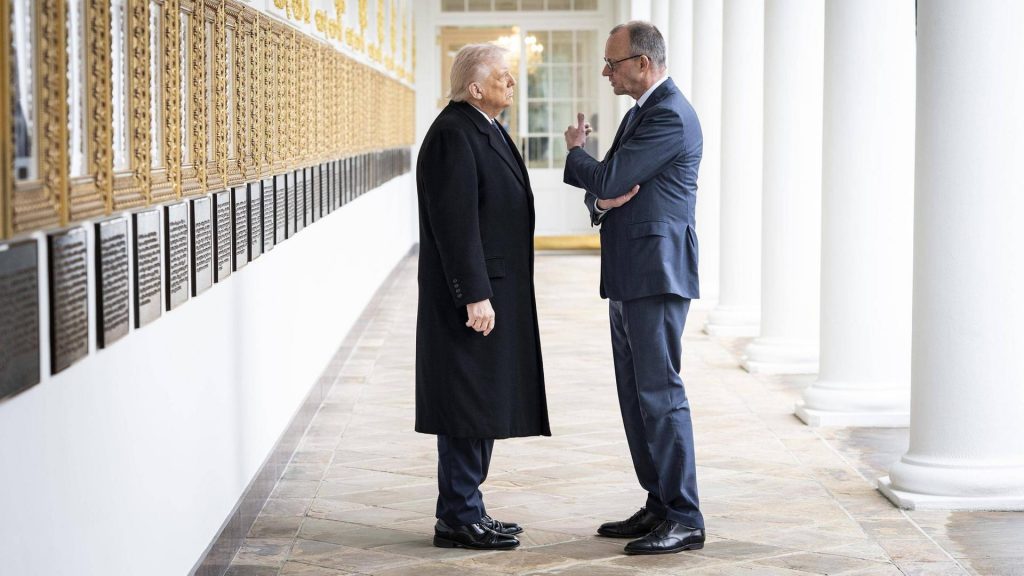
Image from https://www.deutschlandfunk.de/
The Strategic Contradiction
Germany’s Middle East policy under Merz will likely revolve around a paradox.
Berlin seeks to confront the Iranian regime politically while simultaneously preserving regional stability that protects global energy flows.
In other words, Germany must oppose a government located at the center of one of the world’s most important energy corridors.
This tension produces a strategy that might be described as pressure without chaos.
Germany will likely continue advocating stronger sanctions, diplomatic isolation, and international pressure on Tehran. Yet Berlin will also work to prevent a regional war that could destabilize global markets.
Such balancing acts are not new in international politics. But in the Middle East—where security crises and economic shocks are tightly intertwined—the challenge becomes particularly acute.
Preparing for the Long Game
Behind immediate policy debates lies a deeper strategic calculation.
European governments increasingly recognize that the Middle East may be entering a period of structural transformation. Political systems across the region are under pressure from demographic shifts, economic change, and evolving security dynamics.
Germany’s policymakers are therefore likely to prepare for multiple scenarios—including the possibility of significant political change in Iran.
In such a scenario, Europe would seek to reengage economically with a country possessing vast natural resources, a large consumer market, and strategic geographic position between Asia and Europe.
Berlin’s challenge is to maintain leverage today without closing the door to future engagement tomorrow.
Europe’s Emerging Role
For decades, Middle Eastern geopolitics has largely been shaped by Washington, Moscow, and regional powers. Europe’s influence was often secondary.
That may be changing.
As Europe rethinks its energy security and strategic autonomy, Germany—the continent’s economic powerhouse—will increasingly shape how the European Union engages the region.
Merz’s government is therefore not merely reacting to Middle Eastern events. It is redefining Europe’s place within them.
The central question is whether Berlin can maintain its delicate balance: applying pressure on adversarial regimes while preserving the stability that global markets—and European prosperity—depend on.
The answer will shape not only Germany’s foreign policy but also Europe’s role in the next phase of Middle Eastern geopolitics.
About the Author
Sourena Jalili is a member of Juris Trade Hub, an advisory and educational platform focused on the intersection of business, international law, and geopolitics. He holds a Doctorate in Business Administration (DBA), an MBA, and a Master’s degree in International Law, and has over 15 years of experience working with international companies and regulatory authorities in Middle East. His work focuses on global trade governance, sanctions dynamics, Middle Eastern political economy, and the legal frameworks shaping international markets. He writes on geopolitics, international law, and global economic trends.
Latest Blog Posts
Stay informed and inspired with our latest blog posts. Discover insights, tips, and trends across various topics.
-

The Fog of War and the Smoke of Illicit Trade: A Levant in Transition
The Middle East’s latest conflagration has not only redrawn the geopolitical map but has also ignited a shadow economy where Iran stands as a central, albeit isolated, pivot point. As the 2026…
-
Germany’s Merz and the Middle East: Pressure Without Chaos
By Sourena Jalili Europe’s relationship with the Middle East is entering a new phase. With the rise of Friedrich Merz to Germany’s leadership, Berlin’s approach to the region—particularly toward Iran—appears to be…
-

Bridging Theory and Reality: Why Practical and Global Knowledge Matters
And How Juris Trade Hub (JTH) Delivers Both In today’s fast-moving legal and business environment, knowledge alone is no longer enough. What truly differentiates successful students, fresh graduates, and experienced practitioners is…

Leave a Reply